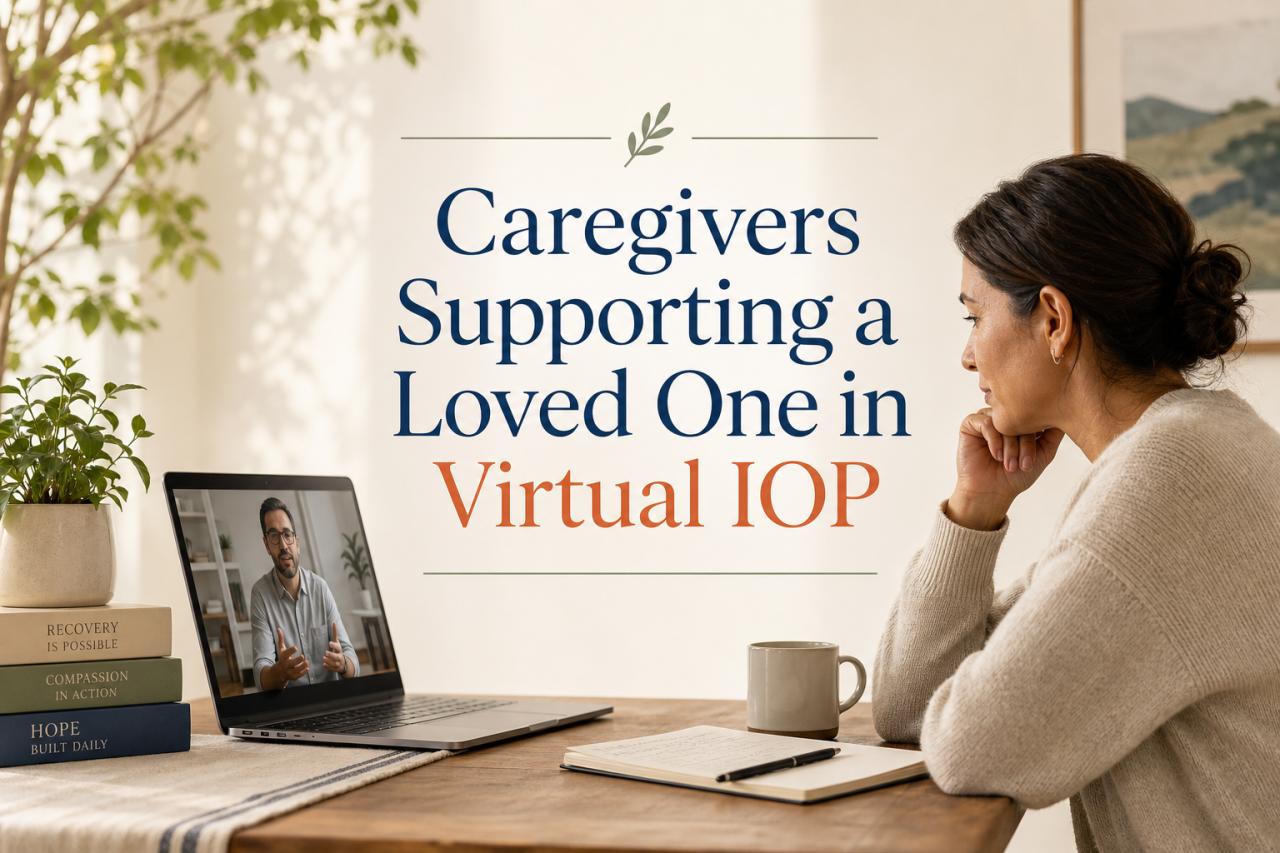
If you're one of the caregivers supporting a loved one in virtual IOP, your job is to protect the hours around treatment, not to run it. HomeBound has delivered live virtual care at Northbound since January 2016, and California residents join individual therapy, group therapy, psychiatry, and case management through Zoom. Clinicians run the care plan. You keep the home substance-free, guard session time and privacy, and know who to call when warning signs show up.
A written household plan works better than informal promises. Agree on roles before week one, so your loved one knows what you'll do, what you won't monitor, and which information the clinical team may share. A signed authorization can set those limits.
Caregiver Roles During HomeBound Virtual IOP
Five jobs cover most of what a caregiver can do without taking over treatment. HomeBound clinicians direct the care plan for California residents under Northbound's DHCS license 300661CP, and you protect the conditions that let your loved one follow it.
Put each live session on the household calendar and keep errands, visitors, and chores out of that block. Give your loved one a closed door, headphones, and freedom from interruptions unless the clinical safety plan calls for supervision. Remove alcohol, non-prescribed drugs, and anything else the treatment team flags as a risk. Learn which concerns go to the therapist, case manager, prescriber, admissions team, or emergency services. Then watch for changes that need reassessment, such as repeated missed sessions, a return to substance use, serious withdrawal symptoms, or a home that has become unsafe.
Put the agreement in plain language before the first week starts. Your loved one should know the difference between support and surveillance, and it helps to write that down.
“Consistency beats intensity.”
What the Household Plan Should Cover
Write down the schedule, privacy rules, technology backup, and safety response. HomeBound sessions run live through Zoom on a computer, phone, or tablet, so the plan has to handle the practical problems that can break remote care.
| Decision | What to Agree On |
|---|
| Schedule | Session times, a preparation period, and who handles meals, pets, children, calls, or deliveries. |
| Private space | The room, door signal, headphones, and how other household members will limit noise. |
| Technology | The primary device, charger, internet access, Zoom login, and a backup device or location. |
| Communication | Who may receive clinical updates, how post-session check-ins work, and when the caregiver contacts the care team. |
| Safety | How substances and medications are stored, which warning signs require clinical guidance, and what triggers an emergency call. |
Test the device, camera, sound, and internet connection before the first scheduled session, and keep the charger nearby. If home internet fails, your loved one should already know how to notify the team and switch to the agreed backup.
Protect a short transition after sessions, too. Therapy can stir up painful memories or strong emotions, and ten quiet minutes before household demands resume can ease the shift without asking your loved one to say what came up.
Therapy Privacy Under HIPAA and HomeBound
Give each HomeBound session the privacy you'd expect in a clinician's office. Don't listen outside the door, read messages, or walk in without permission, and skip demands for a full report afterward.
Privacy laws also shape what Northbound may share. The U.S. Department of Health and Human Services explains patient rights under HIPAA privacy rules. Ask the clinical team which authorization forms are needed and what each one permits.
An authorization can allow specific updates without opening the whole record. Your loved one may let the team discuss attendance, safety concerns, and the discharge plan while keeping therapy details private.
Shared housing needs extra planning. Headphones, a fan or white-noise machine outside the door, and a visible session-in-progress sign cut down interruptions. If privacy still fails, tell the care team so they can assess whether the setting supports virtual participation.
“Privacy supports honest treatment.”
Support That Helps Between Sessions
Help your loved one turn the care plan into a repeatable weekly routine. Keep check-ins brief, ask what practical support would help that evening, and use reminders only if your loved one has already agreed to them.
HomeBound may include individual and group therapy, case management, 12-Step engagement, and psychiatric care as needed. Caregivers can back the assigned tasks, but medication changes and clinical decisions stay with the prescriber and treatment team.
Useful support can stay simple. You might cut noise during a group session, share a meal afterward, drive to a recovery meeting, or take over one household duty during a hard week. A few agreed actions, repeated, usually beat constant advice.
Your own support matters as well. SAMHSA's resources for families explain how substance use can affect a household and where caregivers can find education or counseling. A separate therapist or peer group gives you a place to work through fear and frustration without placing it on your loved one.
“Small actions hold up.”
Boundaries That Replace Monitoring at Home
Set limits around household safety, money, attendance, and conduct before HomeBound begins. A boundary states what you'll do after a specific event. It isn't a threat, and it gives everyone a predictable response.
For example, a caregiver may agree to contact the care team if substances enter the home. Another boundary may require the person in treatment to report a missed session directly rather than asking a family member to make an excuse. Financial limits can restrict cash access when that's part of the agreed recovery plan.
Constant room searches, device checks, and demands for proof can replace self-accountability and damage trust. Use drug testing or other monitoring only when the clinical team puts it in the written plan, and tell your loved one what will happen before it begins.
Virtual care needs a home that supports substance-free living and scheduled participation. If active substance use, serious withdrawal, violence, or repeated absences make the setting unsafe, the clinical team should reassess placement. The ASAM Criteria give clinicians a framework for matching treatment intensity to current risks and needs.
Responding to Substance Use or Withdrawal
Treat a return to substance use as a clinical signal and contact the treatment team promptly. Don't argue while your loved one is impaired. Record what you observed, follow the written safety plan, and let clinicians decide whether outpatient care still fits.
Northbound can reassess care across detox, residential treatment, partial hospitalization, intensive outpatient care, sober living, online treatment, and aftercare. A move to a higher level of care can add structure when risks have changed.
Some withdrawal symptoms need immediate medical attention. The 988 Lifeline provides crisis support for suicidal thoughts and other mental health emergencies.
Don't try to manage serious withdrawal at home. Northbound provides 24-hour medical monitoring during drug and alcohol detox at The Grove in Garden Grove, and detox commonly lasts 5 to 10 days depending on symptoms, substance history, and clinical needs.
If you are in a crisis, please call 988 or 911. This information is not a substitute for professional medical advice.
“Act fast on breathing changes.”
Family Support Through Northbound Programs
Ask about family support early rather than waiting for conflict. Northbound runs a weekly Family Support meeting on Wednesday evenings via Zoom, which gives caregivers a standing place to learn communication rules, privacy limits, and warning signs.
Families can keep attending after discharge, when new routines and boundaries meet real household pressure.
Available family services depend on the level of care. At the residential level, Northbound runs a four-day Family Program each month at no added cost to family members, covering the disease model, communication, family roles, boundaries, and guided sessions with the person in treatment.
Your loved one's clinician can explain which family options apply during HomeBound treatment. Ask about eligibility, scheduling, signed authorizations, and the best way to share concerns.
“Caregivers need care, too.”
What People Want to Know
These answers reflect Northbound's HomeBound structure for California residents and the caregiver practices that support privacy, attendance, and safety.
Can a caregiver attend virtual therapy sessions?
A caregiver may attend when the clinician plans the involvement and the person in care consents. HomeBound's individual and group sessions are designed for enrolled participants, so family participation should be scheduled rather than assumed.
What should I do after a missed session?
Follow the attendance plan and encourage your loved one to contact the care team directly. Repeated absences can point to technology problems, worsening symptoms, substance use, or a need for more structure. Share safety concerns through the communication process set at admission.
Can virtual care work if substances are present in the home?
A substance-free home is the safer setting for HomeBound participation. Ask other household members to remove alcohol, non-prescribed drugs, and identified triggers. If the household can't support that, tell the clinical team so it can reassess the level of care.
Can I call Northbound without a signed authorization?
You can call admissions for general information and share concerns, but privacy rules may limit what staff can disclose about another person's care. A signed authorization should state which information Northbound may discuss with you.
Does insurance cover HomeBound treatment?
Coverage depends on the plan, clinical need, location, and authorized services. Northbound accepts Aetna, Anthem, BlueCross BlueShield, Cigna, Compsych, First Health Network, GEHA, Health Net, ILWU, Magellan, MHN Insurance, NYSHIP, Premera Blue Cross, TriCare, and USAMCO, but plan acceptance doesn't guarantee coverage for a specific service. Admissions can verify benefits before treatment.
Talk With Northbound About the Right Level of Care
HomeBound may fit a California adult who has completed any needed detox, can join live sessions, and has a stable substance-free home. Northbound's admissions team can discuss current risks, caregiver involvement, insurance benefits, and whether another level of care is a safer match.
Call Northbound Treatment at (866) 311-0003. The admissions line is available 24 hours a day.